
Introduction
The trends that shaped 2025 set the stage for a pivotal year ahead. Consumers became more value-conscious, brands strengthened direct relationships through digital and D2C models, and organisations shifted toward more flexible and globally aligned workforce strategies. Companies also saw rising pressure to balance cost control with innovation, integrate sustainability more deeply into operations, and manage increasingly hybrid and distributed teams.
As we move into 2026, these dynamics will intensify rather than fade. The structural shifts that emerged last year, from accelerating automation to more polarised consumer expectations, will require organisations to evolve faster in how they design portfolios, build capabilities, and allocate talent across regions. Understanding these forces early will help businesses make clearer strategic choices in a market defined by fragmentation, shifting priorities, and continued competitive pressure.
What follows is an outlook on the key developments expected to shape the European consumer landscape in 2026, along with practical steps companies can take now to prepare.
Looking ahead to 2026, several structural shifts already visible in 2025 will become more pronounced. These developments will influence how companies design their portfolios, lead their teams, invest in capabilities, and build organisational resilience. Five themes stand out as particularly influential for the year ahead.
Continued Digital & Automation Acceleration
Digital transformation is no longer an initiative; it is a continuous operational reality. In 2026, several aspects will intensify:
- AI-driven optimisation across functions:
From demand forecasting and pricing to content creation and supply chain planning, automation will streamline workflows and increase speed. - Integration of digital tools into everyday roles:
Employees at all levels, not only technical specialists, will be expected to engage with digital platforms, analytics dashboards, attribution software, and AI-enabled tools. - Shift toward higher-value skillsets:
As routine tasks become automated, jobs will focus more on strategic decision-making, creative problem-solving, and cross-functional coordination.
Talent implication:
Upskilling and reskilling will be essential. Companies that fail to build digital confidence across the organisation risk widening capability gaps.
Sustainability Deepens and Becomes More Technical
Sustainability remains a defining theme, not as brand positioning, but as a compliance and innovation necessity.
Key developments for 2026 include:
- growth in sustainable materials and packaging solutions,
- tighter regulatory frameworks across Europe,
- increased scrutiny of supply chain transparency and emissions data,
- the need for cross-functional sustainability integration (from procurement to R&D to operations).
Talent implication:
Demand continues to grow for sustainable procurement professionals, regulatory specialists, and operations experts who can balance environmental targets with commercial requirements.
Organisational implication:
Sustainability will increasingly shape product design, supplier selection, cost structures, and corporate reporting, requiring deeper technical expertise within teams.
Regional Growth Divergence Intensifies
2026 will be defined by uneven market momentum across regions. Differences in consumer confidence, economic stabilisation, and retail dynamics will require companies to adopt more nuanced regional strategies.
Key implications:
- markets such as the U.S. show steadier recovery in consumer durables and discretionary categories,
- parts of Europe continue to grow cautiously, influenced by cost-of-living pressures,
- some Asian markets face uneven demand patterns and shifting import/export dynamics.
What this means for organisations:
Companies need to manage regional resourcing more strategically. Strengthening local leadership, enhancing cross-border mobility, and tailoring commercial activation to local realities. Centralised global models will be challenged unless they offer sufficient flexibility.
Ecosystem & Platform Thinking Gains Ground
Brands increasingly operate as part of broader ecosystems rather than isolated entities.
Emerging patterns include:
- deeper collaboration with creators, partners, and niche communities,
- growth of brand-owned platforms and membership models,
- integration of services into product-based businesses.
Strategic implications:
New hybrid roles will emerge at the intersection of marketing, partnerships, and community building. Organisations must encourage more experimentation, external collaboration, and cross-functional coordination.
Consumer Archetypes: “Comfort Zone” and “Fiercely Unfiltered”
Consumer behaviour continues to polarise around two dominant patterns:
The “Comfort Zone” Consumer
This group prioritises emotional security, simplicity, and risk reduction. They seek:
- products that feel familiar or easy to integrate into daily routines,
- brands that communicate trust, clarity and stability,
- experiences that reduce friction in purchasing and usage.
The “Fiercely Unfiltered” Consumer
This segment values authenticity, transparency, and individual expression. They gravitate towards:
- brands with clear values and honest communication,
- products that enable personalisation or self-expression,
- marketing that celebrates identity and openness.
Implication for organisations:
Companies must strike a balance between reassurance and boldness. Leaders will need stronger emotional intelligence, cultural awareness, and communication skills to resonate across diverse consumer motivations.
Actionable Recommendations for Companies
The transition into 2026 requires organisations to take deliberate steps that strengthen resilience, sharpen competitiveness, and future-proof their talent base. The following priorities are particularly critical across consumer-facing industries:
Realign Talent Strategy With Future Skill Needs
The role and capabilities shaping consumer industries are evolving rapidly. Companies should shift from reactive hiring toward strategic, forward-looking workforce planning.
Key actions:
- identify emerging skill clusters across digital, data, sustainability, and commercial functions,
- map future-critical capabilities against existing workforce strengths,
- build targeted development pathways to close gaps early.
A proactive talent strategy reduces dependency on hard-to-fill external recruitment and supports long-term capability building.
Strengthen Leadership for a Polarised Consumer Landscape
With consumer expectations widening between reassurance and radical authenticity, leadership must evolve accordingly.
Priorities include:
- enhancing emotional intelligence, communication, and cultural agility,
- enabling leaders to navigate cross-functional complexity,
- developing comfort with experimentation and data-driven decision making.
Leadership that connects commercial clarity with human-centric behaviours will be a differentiator in 2026.
Increase Organisational Agility Through Cross-Functional Collaboration
As business models become more integrated, organisations need operating models that promote speed, coordination and shared accountability.
Recommended steps:
- redesign workflows to bring Marketing, Product, Data, and Operations together earlier,
- introduce agile ways of working where appropriate,
- clarify ownership for innovation, sustainability and digital transformation.
Agility is increasingly dependent not on structure, but on collaboration quality.
Prioritise Upskilling and Digital Confidence Across All Functions
Digital acceleration affects every team, not only technical experts. Companies must broaden digital literacy and ensure employees feel confident adopting new tools.
This includes:
- embedding digital and data skills into all role profiles,
- offering accessible upskilling formats for various seniority levels,
- fostering a culture that embraces experimentation and continuous learning.
Organisations that invest early will operate faster and make better decisions as automation scales.
Build Regionally Adaptive Workforce and Commercial Strategies
As global markets move at different speeds, one-size-fits-all approaches are no longer effective.
Companies should:
- strengthen local leadership pipelines where growth is expected,
- improve internal mobility frameworks to redeploy talent across regions,
- tailor commercial strategies to local consumer and retail dynamics.
The increases organisational resilience and ensure talent is positioned where it creates the most value.
Integrate Sustainability Into Core Decision-Making
Sustainability must move beyond compliance to become a central element of product, supply chain, and investment decisions.
Key steps:
- define clear sustainability KPIs that link to commercial objectives,
- ensure technical expertise sits within relevant functions,
- support teams with tools, training and data to make informed decisions.
As integrated approach reduces risk, drives innovation, and meets rising stakeholder expectations.
How Nigel Wright Group Supports Organisations
In a market defined by shifting consumer expectations, accelerating digitalisation, and increasingly complex talent demands, businesses need partners who understand both the industry context and the people who can shape its future. Nigel Wright Group supports organisations across the consumer sector in building the leadership and workforce strategies required for long-term success.
Talent & Leadership Advise
We help organisations define the skills and leadership behaviours needed to meet future challenges. This includes:
- mapping emerging capability requirements across executive, commercial, operational, and support functions,
- assessing organisational structures, leadership profiles, and succession plans,
- advising on team design for cross-functional collaboration.
Our approach combines industry insight with proven assessment methodologies to ensure leaders and teams are prepared for the demands of 2026 and beyond.
Executive Search & Recruitment for Critical Roles
With deep specialisation in consumer markets, we identify and recruit the leaders and specialist who can drive transformation. Our expertise spans:
- Commercial & Marketing
- Digital, Data, & E-commerce
- Operations, Supply Chain, & Sustainability
- Finance, Tech, & HR
- General Management and C-Suite
We connect organisations with talent capable of delivering growth, shaping culture, and navigating increasing complexity.
Workforce & Mobility Strategy
As regional growth patterns diverge, companies require more adaptable workforce models. We support:
- The development of local leadership pipelines,
- Mobility frameworks for deploying talent across markets,
- The design of hybrid and distributed workforce strategies aligned with organisational goals
This enables companies to place the right capabilities where they create the most value
Market Insights & Talent Intelligence
We provide organisations with data-driven insights to inform decision-making, including:
- Salary benchmarks and compensation trends,
- Talent availability analysis across European markets,
- Category-specific insights and leadership trends,
- Guidance on evolving, commercial, and organisational dynamics.
These insights help leaders make confident, future-oriented decisions.
Conclusion
As the industry moves into 2026, the pressures on organisations, leaders and talent models will continue to evolve. Diverging consumer expectations, accelerating digital capabilities and increasingly technical sustainability requirements are reshaping how companies operate and compete. Regional differences in market momentum further reinforce the need for adaptable workforce and organisational strategies.
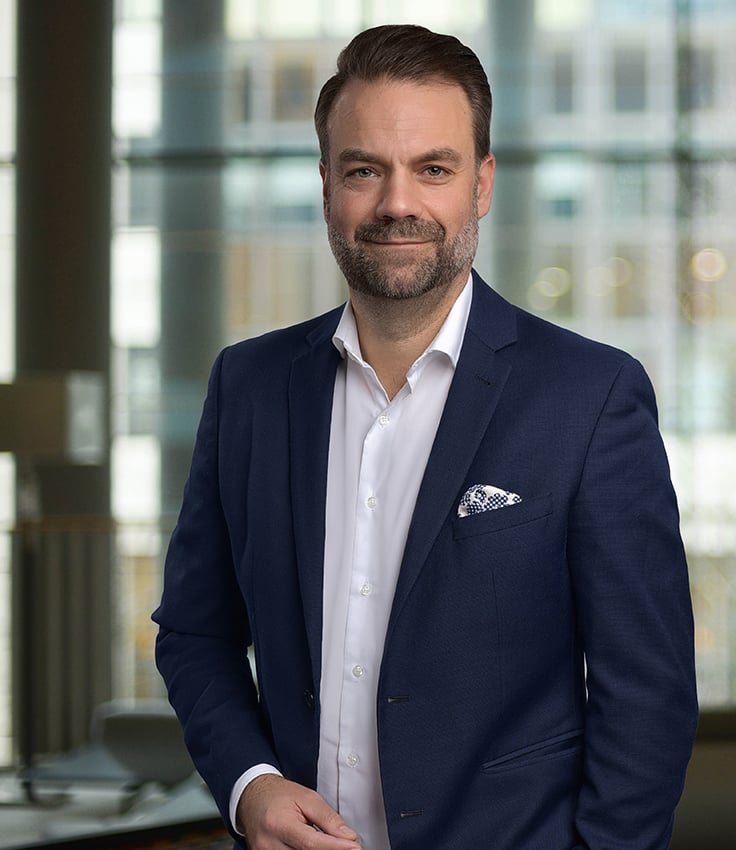
Summarising these challenges, Lars Herrem, Executive Director at Nigel Wright Group, notes:
“Success in 2026 will depend on an organisation’s ability to connect consumer understanding, commercial priorities and strategic talent investment. Businesses that align these three dimensions — and empower their leaders to act on them — will be best positioned to navigate uncertainty and growth.”
He adds that Nigel Wright Group remains committed to supporting organisations in building resilient teams and leadership capable of shaping the future of the consumer industry.