
Digital transformation is increasingly central to how companies grow, make decisions, improve efficiency, and compete. That shift has changed the demands being placed on leadership teams. Businesses are moving into more complex, technology-enabled operating models faster than many leaders are evolving to guide them. In practice, that has created a growing mismatch between digital ambition and leadership capability.
This article draws on Nigel Wright Group’s wider research into business resilience and growth, alongside executive roundtable discussions with senior business leaders. Together, those findings suggest that many organisations are investing in AI, data, and digital capability with clear intent, but often without the leadership depth needed to deliver and embed change at scale. The issue whether leadership capability across the organisation is evolving quickly enough to turn technology investment into sustained business value.
That is why the digital leadership gap matters. The real challenge is deciding whether leadership structures, skills, and confidence are keeping pace with the scale of change businesses are now trying to deliver.
Key Questions Answered
What is the digital leadership gap?
It is the gap between the scale of digital change organisations want to deliver and the leadership capability available to guide, align, and embed that change effectively.
What roles and skills are required to lead digital transformation?
Organisations increasingly need leaders who can bridge strategy, systems, data, execution, and people leadership — not just technical specialists operating in isolation.
Why is it difficult to hire or develop digital leadership capability?
Demand for transformation, data, and AI leadership is high, supply is limited, and many businesses are still trying to retrofit digital leadership into older organisational structures.
How can organisations close the leadership capability gap?
They need a more deliberate mix of targeted hiring, internal development, role redesign, and wider leadership upskilling so digital capability becomes part of how the business is led rather than a specialist add-on.
Digital leadership now extends far beyond technology teams
One of the clearest themes in the discussions was the widening scope of leadership responsibility in the context of digital transformation. Where technology leadership may once have sat largely within IT, digital capability is now relevant across operations, finance, customer experience, and commercial strategy. Leadership teams are increasingly expected to understand the strategic implications of technology, make informed decisions about digital investment, oversee transformation programmes, and align technology more closely with wider business objectives.
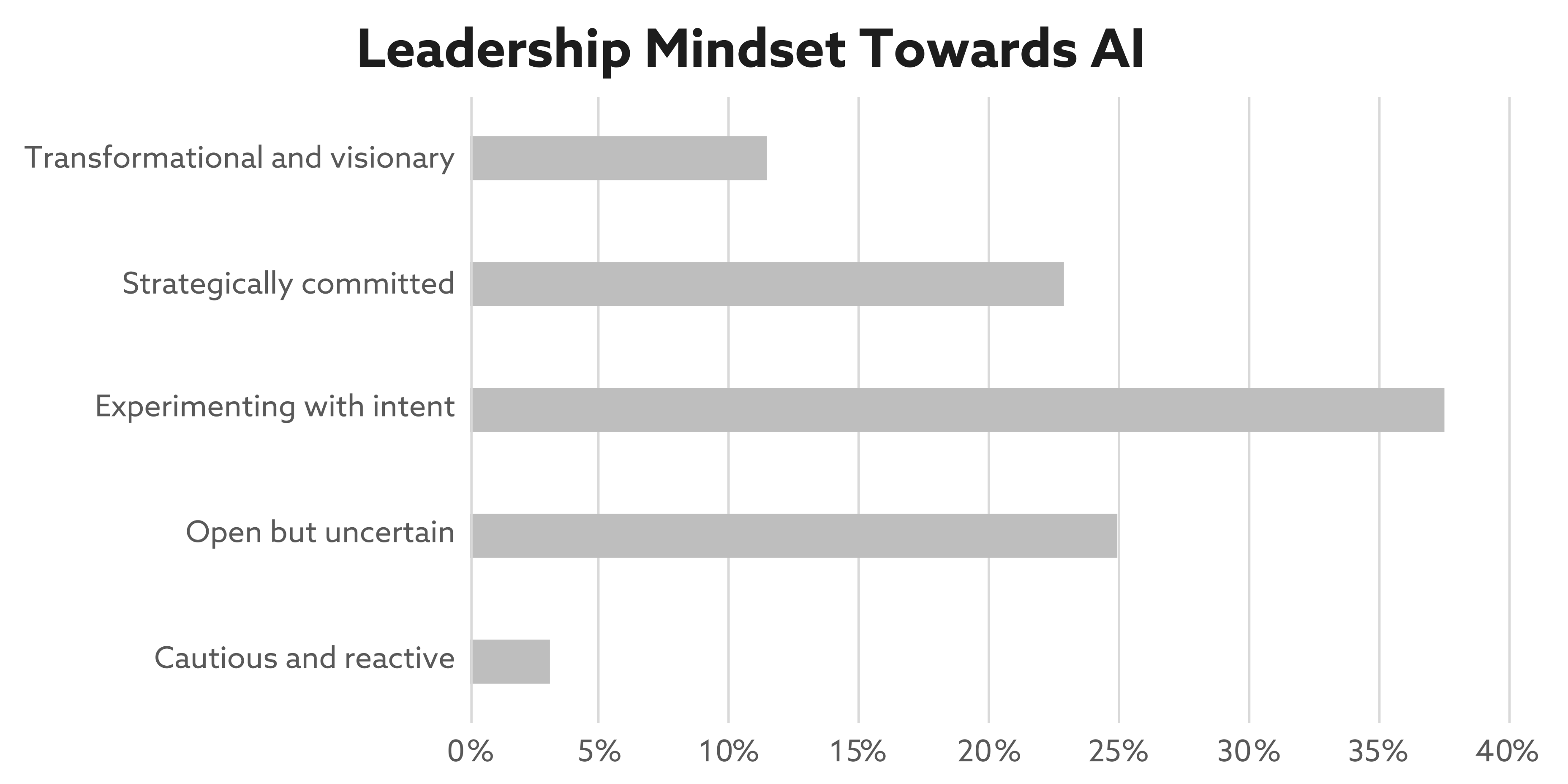
That broader remit requires a deeper and more commercially grounded set of capabilities than many traditional leadership roles were designed to provide. Leadership mindset data reinforces that point. Many teams are engaging with AI through experimentation, but fewer are leading it with full strategic confidence. Momentum is building, but clarity and confidence still vary significantly across organisations.
Digital investment decisions also bring wider governance and commercial implications. Leaders need to understand what is being bought, who owns the data or intellectual property, how systems will be managed, and where risk sits across suppliers and partners. That is one reason digital transformation now sits squarely within mainstream leadership responsibility.
The rise of new digital leadership roles tells its own story
One of the clearest signs of the leadership gap is the emergence of roles focused specifically on digital capability and transformation. Participants referred to organisations hiring or planning to hire Heads of Transformation, Chief Technology Officers, and Data and Analytics Leaders. Those appointments matter because they reflect a growing recognition that digital change often needs dedicated leadership rather than informal ownership spread across existing roles.
The point is that many organisations are creating them because existing leadership structures often cannot carry digital transformation effectively on their own. In some businesses, these roles are being introduced to create capability that does not currently exist. In others, they are intended to restart programmes that have stalled or lacked direction. Either way, the pattern suggests that digital transformation increasingly requires leadership capacity that older structures were not built to provide.
The examples from the discussions illustrate that well. Ben Maxted, CEO of Kitwave, described the need for stronger technology leadership after acquiring businesses operating on different technology stacks. The appointment of a CTO helped the group move away from replacing acquired systems and towards integrating them into a central platform, reducing disruption and improving cohesion. Eoghan Johnston, CFO of iamproperty, explained that hiring a Head of Data and Insights enabled the business to move beyond the limits of Excel and Power BI, with an AI-driven data cube strengthening the foundation for better decision-making.
These examples highlight a broader point. Digital transformation is creating demand for leaders who can connect strategy, systems, data, and delivery in ways that many existing structures were never designed to support.
The deeper issue sits inside existing leadership teams
Although new roles are part of the answer, participants were clear that the challenge extends beyond hiring. Many organisations are still relying on leadership teams built for a different operating environment. As technology evolves, the expectations placed on those leaders are changing quickly. Contributors highlighted a recurring pattern: not all leaders feel confident engaging with digital or AI-related topics, decision-making is sometimes constrained by limited understanding of technology, and digital capability often varies significantly across the senior team.
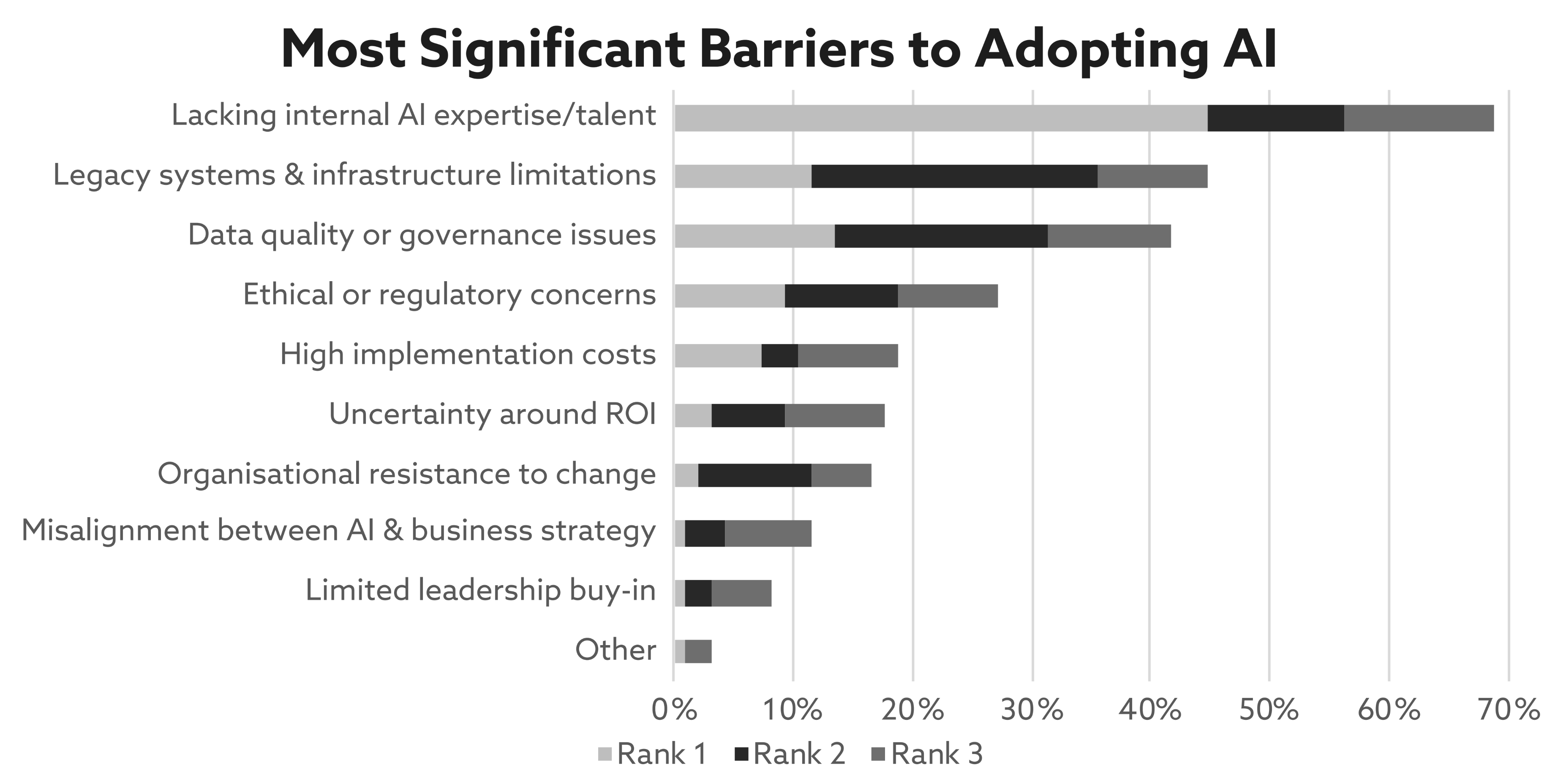
That matters because the digital leadership gap is also a broader issue of leadership readiness. Businesses may invest in technology with the right intent, but still struggle to extract value because leadership capability, system readiness, and operational integration are not yet strong enough. Earlier AI findings help explain why this happens. The main barriers remain internal capability, legacy infrastructure, and data quality — a sign that organisational and leadership readiness are just as important as the technology itself.
This creates a familiar problem. Organisations can make investments in AI, data, and digital tools with clear strategic intent, but still fail to capture their full value because the leadership environment around that investment has not yet caught up.
Hiring remains difficult because the market is short of complete digital leaders
The challenge of closing the digital leadership gap is intensified by the difficulty of hiring the right people. Participants described a highly competitive market for individuals with transformation experience, data and analytics expertise, and digital or AI capability. Demand often exceeds supply, making it difficult for organisations to attract and retain the people they need. The challenge is especially acute for businesses outside major metropolitan centres or those competing against larger, more established technology-led employers.
This is why several contributors described rethinking not only recruitment, but the wider shape of capability-building. Rather than searching indefinitely for an ideal candidate who combines every required skill, some organisations are redesigning roles, splitting responsibilities, or bringing in specialist support where the market cannot provide a single complete profile. That is a pragmatic response to a market in which the perfect digital leader is often much harder to find than the job description suggests.
The implication is important. Organisations need to think more creatively about how capability is assembled if they want to keep pace with fast-moving digital change.
Adaptability has become one of the most important digital leadership capabilities
Beyond technical expertise, participants repeatedly emphasised adaptability as a defining leadership capability. In a fast-changing environment, leaders need to respond to evolving technology, manage ambiguity, and guide organisations through continuous transformation. Several contributors made the point that the digital leadership gap also shows up in whether businesses have enough leaders who can operate confidently in uncertainty and maintain momentum while systems, expectations, and market conditions continue to change.
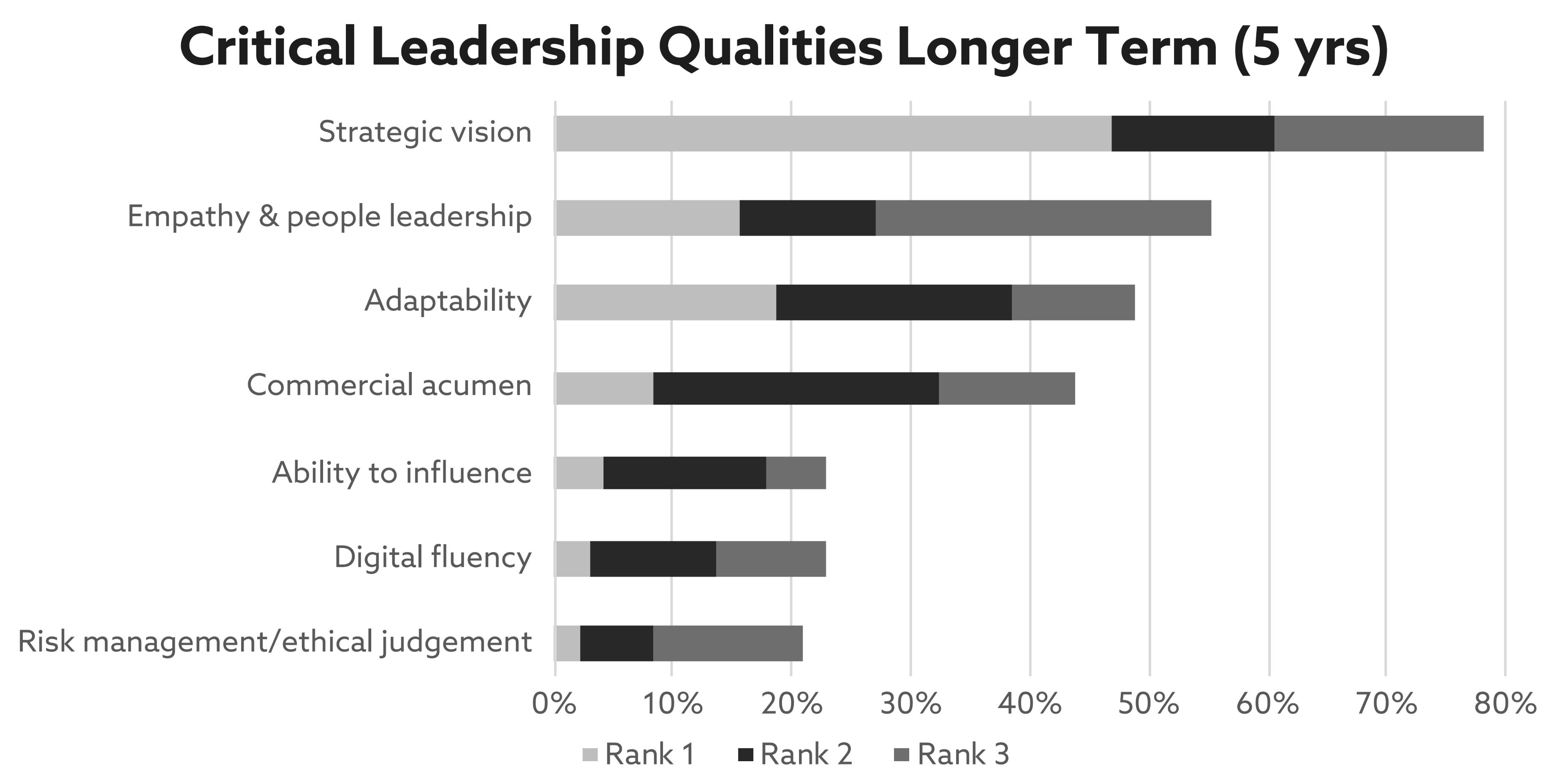
The wider research reinforces that view. The leadership qualities most likely to matter over the next five years are broad rather than narrowly technical, led by strategic vision, empathy and people leadership, adaptability, and commercial acumen. That profile is telling. It suggests digital leadership depends on the ability to set direction, make sound commercial decisions, bring people with you, and stay effective while the business itself is being reshaped.
This point matters because digital transformation is about helping the organisation absorb change without losing clarity, confidence, or commercial discipline. Leaders who can do that are likely to become more valuable as digital complexity increases.
Closing the gap means building capability as well as buying it
In response to hiring pressures, many organisations are focusing more seriously on developing capability internally. Common responses include upskilling existing leadership teams, investing in training and development, and encouraging stronger cross-functional collaboration. These approaches can help close the gap, but they require time, consistency, and visible commitment. Participants also recognised that not all capability can be built internally, particularly where specialist expertise is needed quickly. That is why many organisations are moving towards a blended model that combines external hiring with ongoing internal development.
This is one of the article’s central practical lessons. Moving from isolated experimentation to more confident adoption depends as much on leadership development as it does on technology investment. If the leadership layer does not evolve, digital progress is likely to remain uneven, even when tools and systems improve.
That is also why digital capability needs to stop being treated as something owned by a few technical specialists. It has to become part of how leadership is understood across the wider business.
Leadership is what determines whether technology becomes business value
A central insight from the discussions is that technology adoption is ultimately dependent on leadership. Tools such as AI and automation may offer significant potential, but the value they create depends on how effectively they are implemented, integrated, and aligned with business priorities. Participants highlighted that organisations with stronger leadership capability are better able to translate technological potential into outcomes, align teams around transformation objectives, and overcome resistance in ways that make adoption more sustainable.
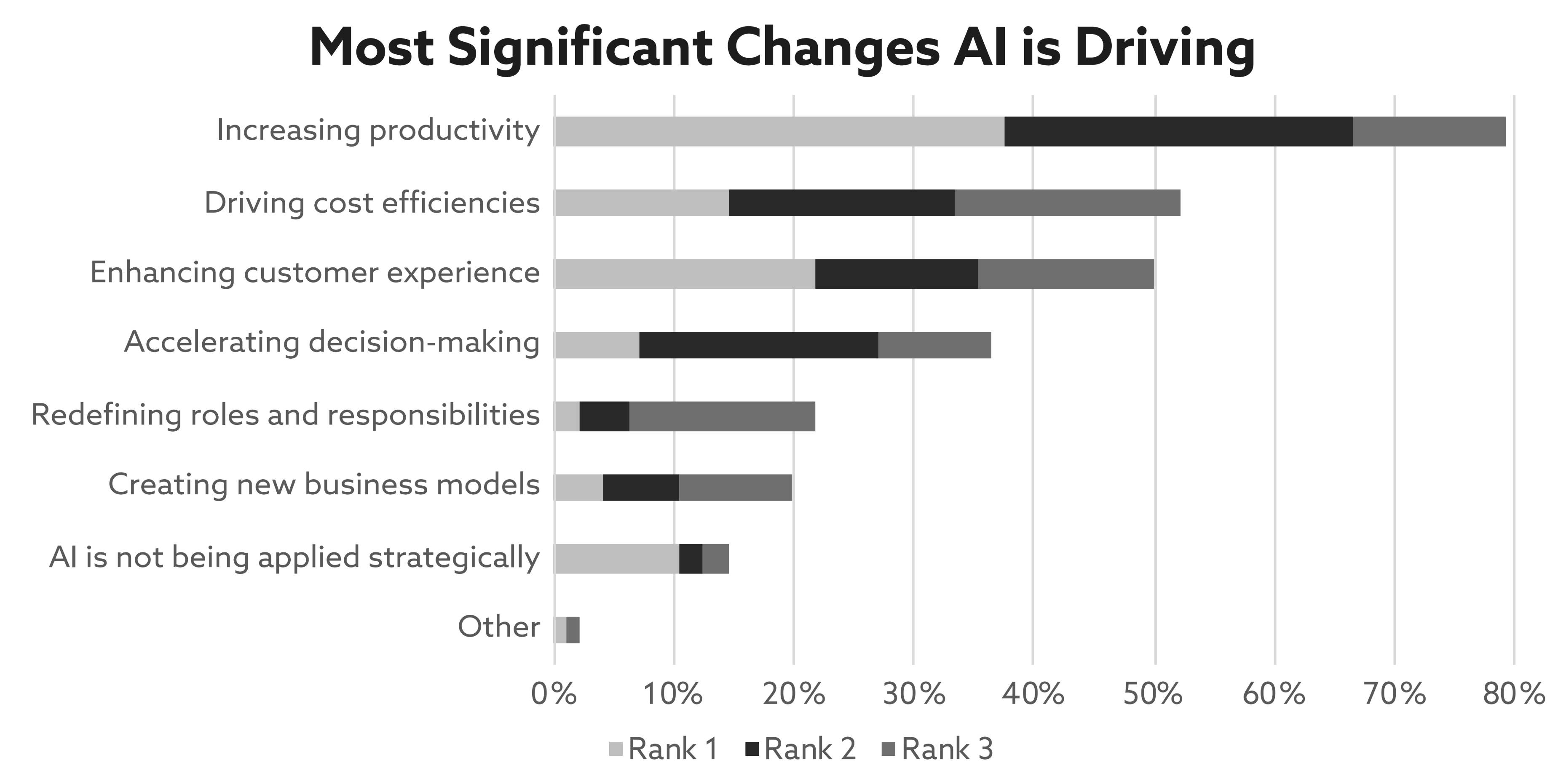
The wider research reinforces why this matters. AI is already improving productivity, cost efficiency, customer experience, and decision speed, but deeper organisational change remains less widespread. That suggests many businesses are realising operational gains, while fewer have yet developed the leadership capability required to embed AI and digital change more fundamentally across the organisation.
Where leadership capability is limited, even well-funded technology initiatives can fail to deliver full value. This becomes even more important when technology moves closer to the customer proposition. In those situations, digital leadership has to connect commercial strategy, procurement, legal risk, cyber resilience, and operational delivery in a coordinated way.
What business leaders should take from this
The findings from the discussions and wider research point to a clear conclusion: the digital leadership gap is now a critical issue for organisations trying to compete in a more technology-driven environment. The challenge is whether leadership capability is developing quickly enough to turn digital investment into coordinated, scalable, measurable business change.
Several practical implications follow. First, digital capability needs to be treated as a core leadership requirement rather than a specialist skill confined to technical functions. Second, organisations need a more proactive approach to capability-building, combining targeted hiring with structured development of existing leaders. Third, leadership teams need to value adaptability, judgement, and commercial understanding alongside digital fluency, recognising that successful transformation depends on more than technical knowledge alone.
Closing the gap also requires sustained attention. As technology evolves, so too will the capabilities needed to lead effectively. Leadership is the factor that determines whether digital change remains an interesting pilot, becomes embedded across the business, and is ultimately translated into measurable commercial value.
Download the Full Report
This article draws on Nigel Wright Group’s wider research into business resilience and growth, alongside executive roundtable discussions with senior business leaders. To explore the full findings, broader market themes, and strategic implications in more detail, download the full report.
Building Resilient Growth Report
This report is based on Nigel Wright Group’s market research across the North of England, examining attitudes to business resilience and growth strategies at the start of 2026.

By submitting your details, you have read and understood our Privacy Notice