

The interim and freelance management market remains stable in 2026 across Germany and the wider DACH region, while continuing to evolve in an increasingly challenging environment. What was once primarily used as a short-term solution has now become a fixed component for many companies, particularly within the “German Mittelstand”, to drive transformation and address operational challenges in a targeted way.
The focus has shifted away from expansion and growth at any cost, towards efficiency, robust processes, and the implementation of digital initiatives. This is driven by rising cost pressure, economic uncertainty, and increasing operational complexity.
For companies, this means one thing above all: requirements for profiles are changing noticeably. Demand is growing for experts who can deliver impact quickly in clearly defined situations. At the same time, mandates are becoming more precisely defined and selection processes more deliberate, while the expectation for speed remains high.
Increasing Specialisation: Broad Profiles Are Losing Relevance
Requirements for interim and freelance profiles are clearly moving towards greater specialisation. Companies are placing less emphasis on generalist leadership profiles and are instead seeking experts with deep functional expertise and proven implementation experience.
This shift is largely driven by operational challenges, for example in supply chain, production, or the digitalisation of existing processes. In these areas, strategic understanding alone is no longer sufficient; companies need individuals who can actively execute change.
What this means in practice:
- Strong demand for specialists in procurement, supply chain, production, logistics, and commercial functions
- Candidates with proven experience in transformation, restructuring, or process optimisation have a clear advantage
- In traditional generalist roles, differentiation, through industry expertise or technological capabilities, is becoming increasingly important
Remote Work: Expectations vs Operational Reality
Hybrid working has become established in the interim market and is an important factor for many professionals when choosing assignments. At the same time, a significant proportion of mandates still require strong on-site presence.
In operational roles and transformation projects in particular, physical presence is often critical to lead teams, understand processes, and implement change effectively.
This creates a clear tension:
On the one hand, there are candidates’ expectations for flexibility; on the other, companies face operational requirements.
What this means for companies:
- Hybrid models increase the attractiveness of mandates and expand the candidate pool
- The required level of on-site presence should be defined clearly and realistically
- Overly rigid requirements can limit access to suitable candidates
Digital Platforms: Greater Access, but No Guarantee of Quality
Digital platforms and matching services have evolved significantly and make it easier to access interim and freelance talent.
For companies, this creates broader access to candidates but also increases the need for careful evaluation. Especially for senior or operational mandates, personal assessment remains critical.
Platforms can accelerate the search process, but they do not replace experience in assessing candidate quality and fit.
Key developments:
- Specialised providers and established networks remain key access points for high-quality candidates
- Digital tools improve speed in the early stages of the search
- References and proven delivery track records remain essential decision criteria
Soft Skills: The Difference Between Execution and Stagnation
Technical expertise is the foundation. However, what increasingly determines success in interim assignments is the ability to build trust quickly and deliver results in complex environments.
In the German Mittelstand in particular, interpersonal skills and cultural fit play a significant role alongside technical capability.
Particularly important are:
- Stakeholder management and clear communication
- The ability to manage resistance in transformation projects
- Cross-functional collaboration
- Knowledge transfer and building internal capabilities
Changing Motivation: Interim as a Deliberate Career Choice
A growing number of experienced professionals are consciously choosing careers in interim or freelance roles. Key drivers include flexibility, the ability to focus on impactful work, and exposure to a variety of projects.
For companies, this leads to a shift in dynamics:
Experienced interim professionals are selective about the assignments they accept.
Implications for companies:
- Clearly defined objectives and structured mandates increase attractiveness
- Unclear frameworks or unrealistic expectations can deter candidates
- Well-designed projects consistently attract stronger talent
The German Mittelstand: Efficiency Over Expansion
One of the key drivers of interim demand in Germany is the increasing focus on efficiency, cost control, and operational excellence within the Mittelstand.
Against a backdrop of economic uncertainty, rising costs, and growing complexity, companies are prioritising internal optimisation over expansion.
Typical areas of deployment include:
Procurement & Supply Chain
- Optimising sourcing strategies and supplier structures
- Reducing dependencies and increasing supply chain resilience
- Digitalising procurement processes
Production & Logistics
- Improving manufacturing efficiency
- Implementing lean methods and process standardisation
- Optimising warehouse and logistics operations
Sales & Commercial Excellence
- Improving sales processes and structures
- Pricing optimisation and margin management
- Increasing efficiency in B2B sales environments
Key Recommendations for Companies in 2026
Topic |
Action |
|
Specialisation |
Define mandates clearly and precisely |
|
Flexibility |
Use hybrid working models strategically |
|
Selection Process |
Apply structured evaluation and reference checks |
|
Soft Skills |
Assess leadership and communication capabilities |
|
Efficiency Focus |
Align mandates with measurable operational outcomes |
|
Critical Roles |
Secure key talent early to avoid bottlenecks |
About the Nigel Wright Group
The Nigel Wright Group is a specialised executive search and interim management consultancy with a focus on consumer, industrial, and technology sectors. We support companies across Europe in identifying experienced leaders, both permanent and interim, who deliver measurable results.
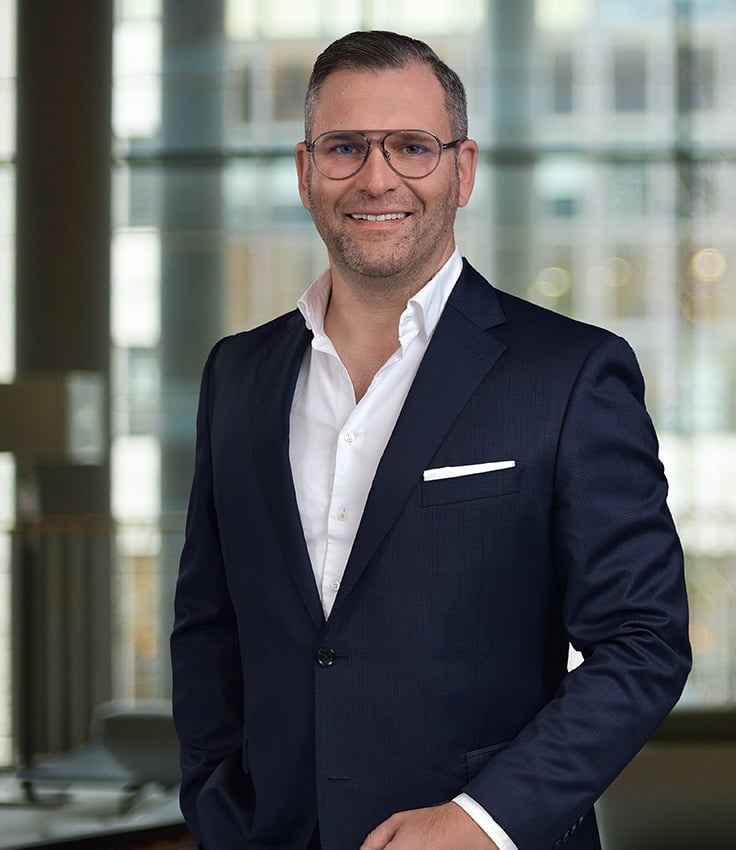
Steffen Gemmel
Geschäftsführer Nigel Wright Interim GmbH
E: steffen.gemmel@nigelwright.com